Introduction
The ride-hailing industry continues to create opportunities for entrepreneurs who want to build digital transportation businesses. Customers expect convenient booking, flexible payment options, real-time driver tracking, and reliable rides. At the same time, drivers want fair earnings, flexible working hours, and greater control over the fares they accept.
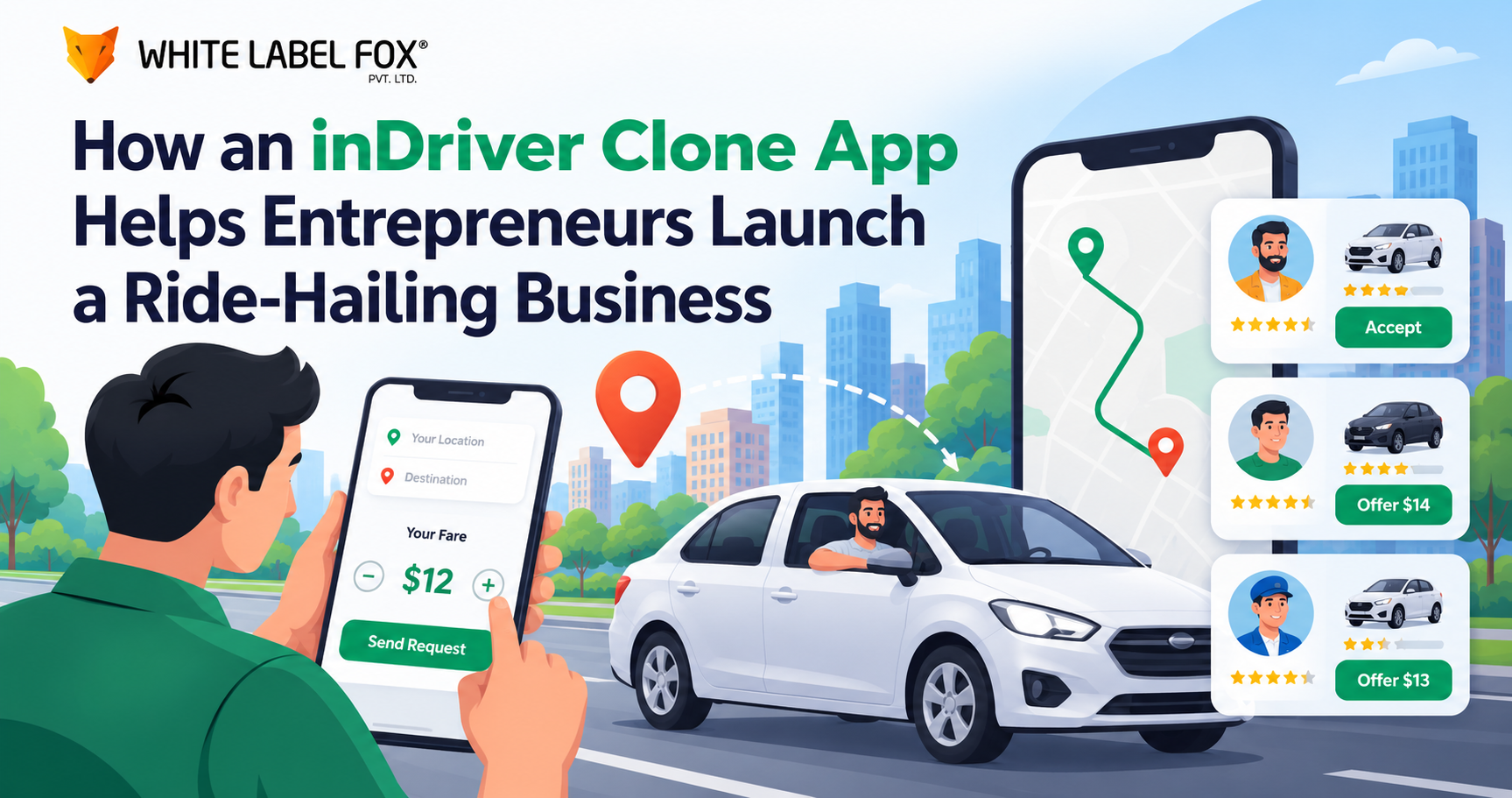
An inDriver Clone App offers a practical starting point for businesses that want to enter this competitive market. Inspired by the fare-negotiation model associated with inDrive, this solution allows passengers to suggest fares and drivers to accept, reject, or counter those offers, depending on the platform’s configured rules.
For startups and established businesses, an Indriver Clone App provides a ready-made foundation for launching a branded ride-hailing service. Entrepreneurs can adapt the platform to their target market, define their service policies, and introduce features that match local transportation needs.
Rather than building every business function from scratch, companies can use an existing taxi booking solution to organize their launch strategy and focus on acquiring customers, onboarding drivers, and building a recognizable brand.
What Is an inDriver Clone App?
An inDriver Clone App is a ride-hailing platform inspired by the core booking and fare-negotiation experience of inDrive. It connects passengers with drivers through a mobile application, allowing both parties to participate in the ride-booking process.
Unlike conventional taxi applications that primarily rely on automatically calculated fares, this model can allow passengers to propose a fare for their journey. Available drivers can review the request and decide whether to accept the offer or suggest another amount.
The platform typically includes three main components:
- Passenger app: Allows users to request rides, suggest fares, compare driver offers, track journeys, and make payments.
- Driver app: Enables drivers to view ride requests, respond to proposed fares, manage trips, and monitor earnings.
- Admin panel: Helps business owners manage users, drivers, bookings, service areas, commissions, complaints, and platform activity.
An Indriver Clone App can be customized to support different vehicle categories, regional preferences, payment methods, and operating policies. This flexibility makes it suitable for entrepreneurs targeting specific cities or broader transportation markets.
However, a successful platform requires more than an application. Driver availability, customer support, safety procedures, and local regulatory compliance are equally important to long-term business performance.

How Does an Indriver Clone App Work?
The booking process is designed to give passengers and drivers more flexibility when arranging a ride.
1. Passengers Enter Their Journey Details
Customers open the app and enter their pickup location and destination. Depending on the service configuration, they may also select a vehicle category, add trip preferences, or provide additional instructions.
The application uses the journey details to help passengers submit a ride request.
2. Passengers Suggest a Fare
Instead of relying exclusively on a fixed fare, passengers can propose an amount they are willing to pay for the journey.
The platform may provide fare guidance based on distance, demand, location, or other business rules. This helps users make more informed offers while allowing the business to maintain appropriate pricing controls.
3. Drivers Review and Respond
Available drivers receive relevant ride requests and evaluate the proposed fares. Depending on the platform’s functionality, they can accept an offer, decline it, or submit a counteroffer.
Passengers can then review available drivers and select an option that suits their preferences. Ratings, estimated arrival times, and vehicle details can help them make a decision.
4. The Ride Is Completed
After a driver is selected, the passenger can view the driver’s details and track the vehicle’s arrival. During the journey, location tracking and trip information help both parties stay informed.
Once the ride is complete, the customer can pay through a supported payment method, provide feedback, and rate the driver.
5. Business Owners Monitor Operations
The admin panel gives operators visibility into bookings, driver activity, complaints, transactions, and service performance. These insights help businesses identify operational problems and improve the customer experience.
This process gives entrepreneurs a structured way to manage ride requests while offering passengers and drivers greater participation in fare selection.
Read More: Top Features to Include in Your InDriver Clone App for 2025
Key Features That Make an inDriver Clone App Useful
Choosing the right features is essential when preparing a ride-hailing platform for launch. The objective should be to solve real transportation problems rather than simply replicate another application’s interface.
1. Fare Negotiation
Fare negotiation is a defining feature of an Indriver Clone App. It allows passengers to suggest a fare and gives drivers the option to evaluate the offer.
Businesses can configure rules for counteroffers, offer acceptance, and fare limits. These controls help maintain a consistent booking experience while accommodating local market conditions.
2. Real-Time GPS Tracking
Live location tracking helps passengers monitor their driver’s arrival and follow the journey. Drivers can also use navigation tools to locate pickup points and reach destinations efficiently.
Accurate location information improves coordination and can reduce confusion during pickups.
3. Driver Profiles and Ratings
Passengers should be able to review relevant driver information before confirming a ride. Profiles can include driver ratings, vehicle details, and other verified information.
A rating and review system also helps operators identify service issues and recognize drivers who consistently provide good experiences.
4. Multiple Payment Options
Customers have different payment preferences across regions. A ride-hailing platform may support cash, cards, digital wallets, or locally available payment methods.
Providing suitable options can make the booking process more convenient and help businesses serve a wider audience.
5. Booking History and Notifications
Passengers benefit from access to previous rides, receipts, and booking details. Drivers need a clear record of completed trips and earnings.
Push notifications can communicate booking confirmations, driver arrivals, trip updates, cancellations, and other important events.
6. Admin Dashboard and Management Tools
The admin panel helps business owners oversee daily operations from one place. Important functions may include driver verification, customer management, booking oversight, commission settings, complaint handling, and performance reports.
These controls become particularly useful when a business expands into multiple service areas or introduces additional vehicle categories.
7. Safety and Support Features
Safety should be considered from the beginning. Depending on the market and business requirements, the platform may include emergency contacts, trip-sharing options, driver verification, complaint reporting, and customer support access.
Businesses must also establish clear procedures for handling incidents, protecting user information, and responding to disputes.
Business Opportunities for Entrepreneurs
An Indriver Clone App can support several transportation business models. Entrepreneurs should select an approach that reflects local demand, driver availability, and their ability to manage operations.
Launching a Local Ride-Hailing Service
Starting in a specific city or neighborhood allows businesses to focus on a defined customer group. Operators can onboard drivers in selected areas, establish service standards, and build local brand awareness before expanding.
This approach also makes it easier to identify common booking problems and adjust service policies based on customer feedback.
Serving Underserved Locations
Some smaller cities and suburban areas have limited access to organized ride-hailing services. A localized platform can address transportation gaps by connecting passengers with available drivers.
Entrepreneurs should assess demand, transport regulations, and driver participation before selecting a launch location.
Offering Multiple Vehicle Categories
A business may support different transportation options, such as standard cars, premium vehicles, or other locally appropriate categories.
These choices allow operators to serve different passenger needs while giving drivers opportunities to participate according to their vehicles and eligibility.
Providing Corporate Transportation
Businesses can explore ride-booking services for employees, clients, and business visitors. Depending on the platform’s capabilities, corporate customers may benefit from centralized booking management, trip records, and account-based payment arrangements.
This model can help operators build relationships with local companies instead of depending entirely on individual passenger bookings.
Expanding Into Additional Mobility Services
Once the core ride-hailing operation is stable, entrepreneurs can evaluate related opportunities, such as scheduled rides, airport transfers, or business travel services.
Expansion should be based on demonstrated demand and operational readiness. Adding services too early can increase complexity without improving customer satisfaction.
Why Businesses Choose an Indriver Clone Script
Entrepreneurs often need to balance launch speed, customization, and operational readiness. An Indriver Clone Script provides an existing foundation for a ride-hailing platform, allowing businesses to concentrate on adapting the solution to their goals. Before making a decision, it is also important to understand the factors that influence the overall investment. Explore our guide on inDriver Clone App Cost to learn more about planning your ride-hailing business launch.
Faster Market Entry
A ready-made solution can reduce the amount of initial product work required compared with developing an entirely new platform. Businesses can focus on defining their service model, preparing their brand, onboarding drivers, and testing the booking process.
The actual launch timeline still depends on customization, integrations, testing, and regulatory requirements.
Customization for Local Markets
Transportation preferences differ across countries and cities. A business may need local payment methods, language options, regional fare policies, or specific vehicle categories.
A customizable Indriver Clone App allows entrepreneurs to align the booking experience with these requirements rather than relying on a one-size-fits-all model.
Support for Business Growth
The platform should be capable of supporting increasing booking activity, additional drivers, and new service areas. Businesses should assess operational controls, reporting capabilities, and the provider’s upgrade and maintenance practices before choosing a solution.
Growth readiness also depends on driver recruitment, customer retention, and service quality.
Greater Focus on Business Operations
Using an established solution can help founders direct more attention toward marketing, partnerships, driver acquisition, and customer support.
These activities are central to building a sustainable ride-hailing business. Even the best taxi app script cannot compensate for poor driver coverage, unreliable service, or a lack of customer trust.
A Branded Customer Experience
A ready-made inDriver like app can be adapted with a company’s name, visual identity, and relevant business rules. This allows entrepreneurs to establish their own brand while providing familiar ride-booking functionality.
Before selecting the best inDriver clone for their business, founders should evaluate customization options, platform ownership, security practices, maintenance support, and the provider’s experience with ride-hailing products.
How to Choose the Right Ride-Hailing Solution
Selecting a solution requires more than comparing feature lists. Entrepreneurs should evaluate whether the platform supports their business model and operating requirements.
Start by reviewing the fare-negotiation workflow, including how passengers submit offers and how drivers respond. Confirm that the process is easy to understand and that fare rules can be configured appropriately.
Next, assess the passenger and driver experience. Booking, navigation, notifications, payments, and support should work reliably across the devices used by the target audience.
Security and operational management are equally important. Review driver verification options, access controls, data protection practices, complaint management, and reporting tools.
It is also worth checking whether the provider offers ongoing updates, maintenance, documentation, and assistance after launch. Clear ownership terms and access to the agreed deliverables should be established before making a commitment.
Finally, validate the platform with a limited group of drivers and passengers before expanding. Testing real booking scenarios can reveal usability issues, operational gaps, and service policies that need improvement.
Conclusion
An Indriver Clone App gives entrepreneurs a practical foundation for entering the ride-hailing market with a fare-negotiation model. It can help businesses organize passenger bookings, connect drivers with ride requests, and manage daily operations through a centralized platform.
However, long-term success depends on more than selecting software. Entrepreneurs must understand their target market, recruit reliable drivers, maintain service quality, establish safety procedures, and build trust with passengers.
A ready-made inDriver like app can support these efforts when it offers suitable customization, reliable functionality, and room for business growth. Before launching, founders should compare providers carefully and confirm that the solution matches their operational requirements.
Working with an experienced clone app development company can help businesses evaluate their options, customize the platform, and prepare for launch. With a clear business strategy and a customer-focused approach, entrepreneurs can build a recognizable ride-hailing brand and expand as market demand develops.
Frequently Asked Questions
1. What is an Indriver Clone App?
An Indriver Clone App is a ride-hailing solution inspired by inDrive’s fare-negotiation model. It allows passengers to propose fares and drivers to accept, reject, or counter offers, depending on the platform’s configured features.
2. How does an Indriver Clone Script help entrepreneurs?
An Indriver Clone Script provides an existing foundation for launching a branded ride-hailing service. It can reduce initial product development work and allow entrepreneurs to focus on customization, driver onboarding, marketing, and daily operations.
3. Can an inDriver Clone App be customized for a local market?
Yes. Depending on the provider, businesses can customize branding, supported languages, payment options, vehicle categories, service areas, and fare-negotiation rules to suit local requirements.
4. What features should a ride-hailing app include?
Important features include fare negotiation, GPS tracking, driver profiles, ratings, booking management, payment options, notifications, an admin dashboard, and customer support. Safety and driver verification features should also be considered.
5. What should entrepreneurs check before choosing the best inDriver clone?
Entrepreneurs should evaluate the booking workflow, customization capabilities, security measures, platform ownership terms, scalability, maintenance support, and provider experience. They should also test the solution with real users before expanding into additional markets.